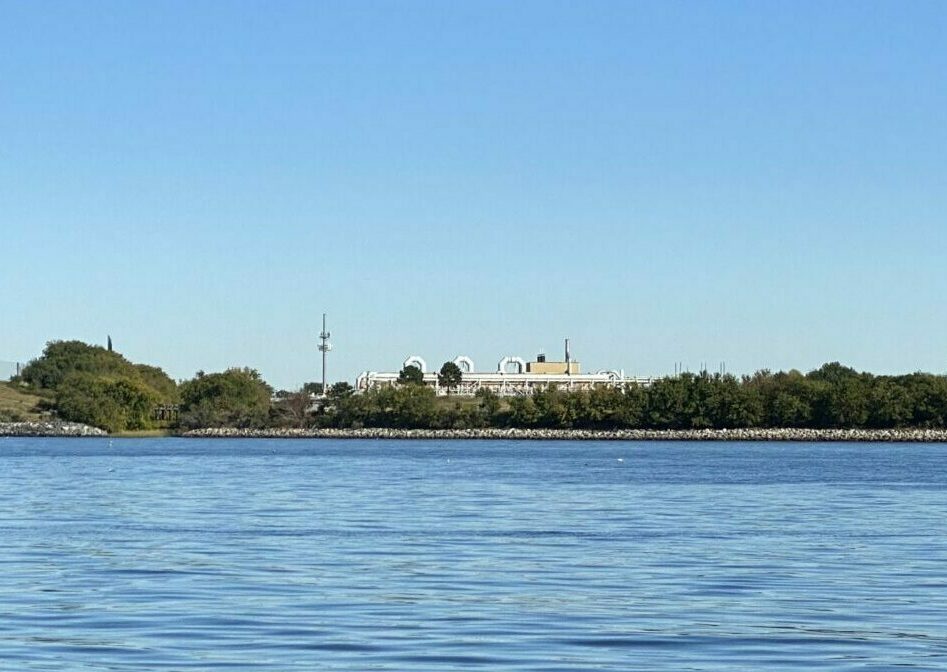
 Elizabeth River, Norfolk, Virginia, USA
Elizabeth River Project
The project concluded in 2025 following the successful completion of two planned field demonstrations at VIP wastewater treatment facility in Norfolk, Virginia. This project examined whether alkalinity enhancement could improve wastewater quality, reduce local acidification and contribute to scientific understanding of Carbon Dioxide Removal at Elizabeth River. It was funded by National Oceanic and Atmospheric Administration (NOAA)’s multi-disciplinary Marine Carbon Dioxide Removal (mCDR) initiative.
Quick Facts
- Project Start:
- Phase 1: 28th Oct-2nd Nov 2024
- Phase 2: 8th July- 3rd Aug 2025
- Partners:
- University of Maryland Center for Environmental Sciences (UMCES)
- University of Delaware (UD)
- Hampton Roads Sanitation District (HRSD)
- Funding: NOAA-NOPP
- Location: Hampton Roads Sanitation District (HRSD)-VIP wastewater treatment facility, Norfolk, Virginia
- Community Engagement: See Community Engagement Report
All project deployment and monitoring activities have concluded
Project Timeline
Project awarded funding by the NOAA Ocean Acidification Program (OAP) on behalf of the National Oceanographic Partnership Program (NOPP). 16 other projects dedicated to marine carbon dioxide removal were also funded.
Early-stage project development began on site including community outreach.
The first phase of field demonstration ocean alkalinity enhancement (OAE) at HRSD-VIP site at Elizabeth River was completed. (1 week of dosing)
The second phase of field demonstration of ocean alkalinity enhancement (OAE) at HRSD-VIP site at Elizabeth River was completed. (4 weeks of dosing)
Scientific work
The two field deployments confirmed that the added alkalinity behaved as predicted, reduced acidity, remained within permitted limits, and resulted in the removal of more than 40 tonnes of atmospheric CO₂. The chemical changes observed in the river were smaller than its natural variability, and monitoring detected no changes in oyster growth or tissue trace metal concentrations compared with a nearby control site. These findings support the technology’s effectiveness while indicating no measurable impacts on local water quality or oyster health during the deployments. A full scientific analysis is being prepared for publication in a peer-reviewed journal.
Socio-economic considerations
We looked at ways this project could benefit the local economy, support businesses, and improve infrastructure, with the goal of creating positive outcomes for both the community and the environment. During the project period, approximately CAD $1 million was directed to Virginia-based companies and institutions through engineering services, environmental sample analysis, storage, logistics, equipment, accommodation, community sponsorships and other local services.
Community Engagement and Feedback
Planetary prioritized community involvement, recognizing the importance of transparency, local knowledge and feedback in the research and field deployment of ocean alkalinity enhancement. Community engagement was embedded throughout the project, from early planning through the two field demonstrations and project completion.
“We are so grateful for the partnership and collaboration you have brought to ERT with your incredible work. It’s such a gift to know our community is being invested in this way.”
Kindra McDonald Greene, Executive Director, Elizabeth River Trail Foundation, Virginia
“We’re thrilled at the work Planetary is doing-– including in our backyard along the Elizabeth River in Virginia. We’re excited to continue our strong partnership with Planetary and can’t wait to see what we can accomplish together moving forward.”

April Strickland, Director of Major Giving, Hampton Roads, Chesapeake Bay Foundation (CBF), Virginia

Planetary worked to build relationships and collaborate with environmental stewards, nonprofit and equity-focused organizations, youth groups, multicultural associations, residents and local governments. Engagement activities included technical briefings, site visits, guided tours, public events and direct discussions. This included participation in Community Trails Day at Lambert’s Point, engagement with the Chesapeake Bay Foundation and more than 25 other organizations, and opportunities for community members to visit the research site and ask questions about the project’s objectives, monitoring approach and environmental safeguards.
The project also benefited from external technical review and sustained local oversight. Presentations were made to the Technical Policy Committee of the Elizabeth River Project, an independent regional environmental nonprofit, before, during and after both the field demonstrations.
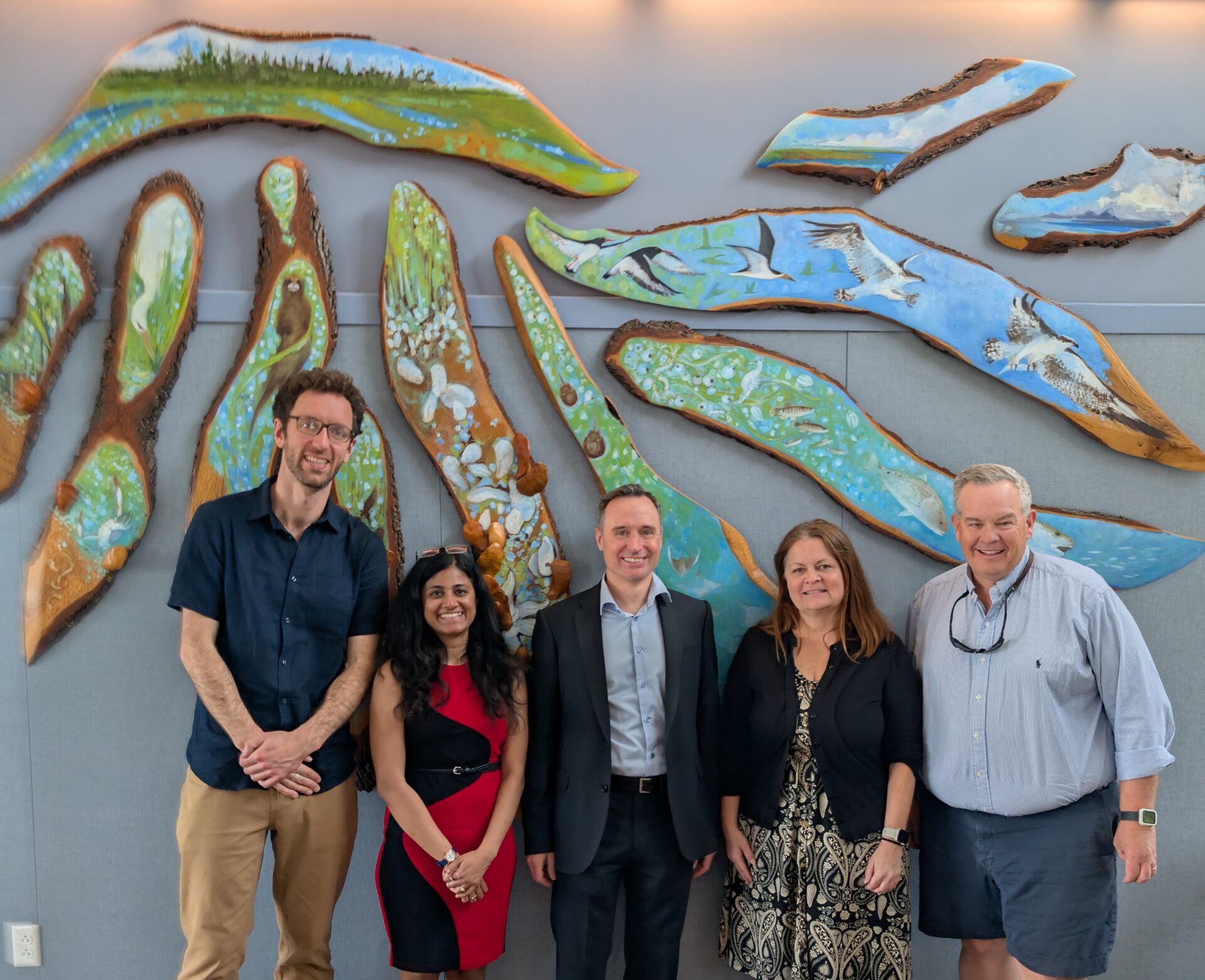
[Photo Right: Planetary at Brock Environment Center with Chesapeake Bay Foundation’s (CBF) Leadership]
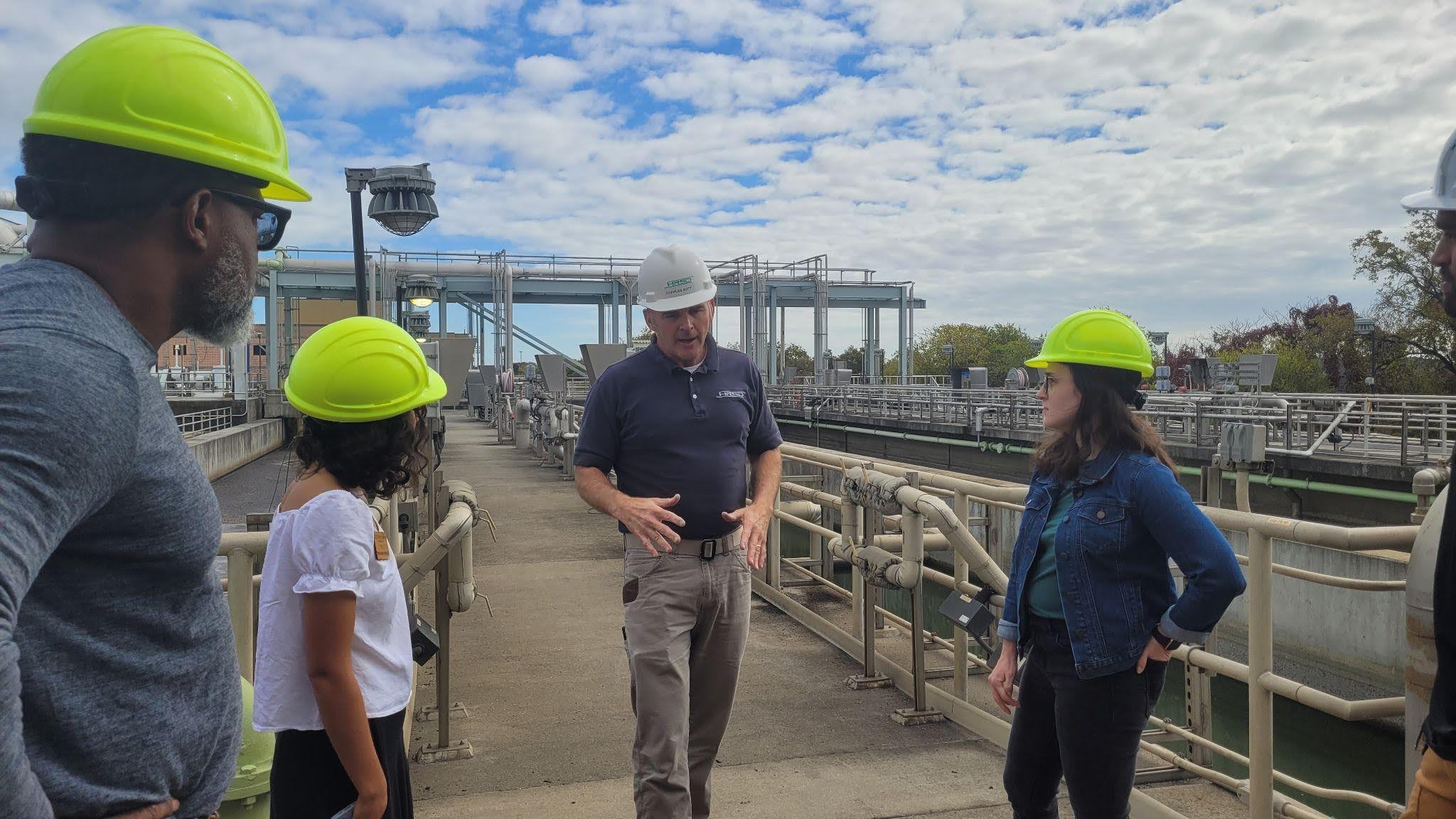
Representatives from environmental organizations and public agencies also visited the site during deployment.
Feedback gathered through these engagements reinforced the importance of oyster monitoring, transparent communication and alignment with regional environmental restoration priorities. Together, these efforts helped ensure that the research was informed not only by scientific and regulatory requirements, but also by the knowledge, concerns and priorities of the communities and organizations connected to the Elizabeth River.
Why Here?
The Elizabeth River site offered a unique opportunity to study an estuarine environment, distinct from ocean or sea. This site, near the University of Maryland and University of Delaware, benefits from a wealth of baseline data and scientific expertise. The VIP plant, known for its leadership in wastewater treatment, ensured a base for precise monitoring, allowing us to collect the best possible data for our project. With high-quality ocean models already in place, the site was ideal for research and field deployment on de-acidification in a region threatened by increasing acidification. Additionally, the Elizabeth River’s history of environmental restoration made it an ideal location for furthering efforts to recover and protect marine ecosystems.
[Photo Left: Elizabeth River Project (ERP) and NOAA visit Planetary’s site at HRSD VIP facility at Norfolk, 2024]
Regulatory Compliance
These two field trials complied with regulatory standards set by the Virginia Department of Environmental Quality (VADEQ) and EPA, ensuring environmental safety throughout the process.

Who Particpated?
This project was executed jointly by members of several public and private groups. Collaborating institutions include:
The University of Maryland Center for Environmental Science (UMCES), which has developed an international reputation in coastal science and contributed to the revitalization of Chesapeake Bay. Doctors Jeremy Testa and Ming Li, both of the UMCES, served as this project’s Principal Investigator and led on hydrodynamic-biogeochemical models.

The University of Delaware School of Marine Science and Policy (SMSP), committed to advancing the understanding, stewardship, and conservation of estuarine, coastal and ocean environments. The school’s Dr. Wei-Jun Cai led this project’s observational program.

Hampton Roads Sanitation District (HRSD) was the outfall partner on this project. They made their infrastructure available for use and supported this project as part of their investigation of new ways to reduce the environmental impact of wastewater treatment. Dr. Charles Bott is HRSD’s chief operator.
Planetary provided alkalinity and executed its addition, provided ground staff, supported permitting process and monitoring efforts and led community engagement. Planetary also supported interpretation and validation of data as well as integration of its MRV approach within the wastewater facility.
The National Oceanic Atmospheric Administration (NOAA) has supported this project through its Ocean Acidification Program but was not involved in its operation.
Project Resources
Field Deployment Results: Webinar
2025 Community Engagement Report: This is a comprehensive account of Planetary’s community engagement, independent oversight, public-access activities, feedback integration and local economic contribution associated with this project.
Community Speaker Series: Elizabeth River Trail Foundation (ERTF), Chesapeake Bay Foundation (CBF).
The completion of this project does not represent an end to Planetary’s interest in Virginia. Planetary will continue to explore potential research and partnership opportunities in the region. Any future initiative would be announced as a separate project and would be subject to its own scientific, regulatory, partnership and community-engagement processes.

Questions?
Questions about the completed Elizabeth River research project may be directed to elizabethriver_project@planetarytech.com