

Planetary’s second Two-Eyed Seeing session brought together Mi’kmaq knowledge holders, community members, advisers and Planetary staff for a day of learning, reflection and relationship-building in Eskasoni, Nova Scotia.
On August 27, 2026, Planetary gathered at the Sarah Denny Cultural Centre in Eskasoni, Nova Scotia, for the second session of our Two-Eyed Seeing journey.
Our first gathering, held in Halifax in April, created space for introductions and shared understanding. This second session allowed us to go deeper to begin “setting the table” for how Two-Eyed Seeing can shape not only Planetary’s work, but also how we understand our responsibilities to the ocean, to one another and to future generations.
Gathering in Eskasoni
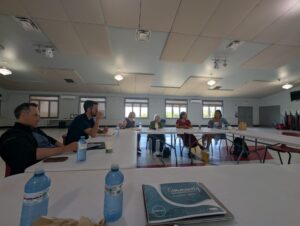
Planetary was represented by:
- CEO Mike Kelland,
- Diana Philip, Vice President of Community and Government Relations,
- Will Burt from the Science and Product team,
- Eric Christmas, Senior Adviser, Indigenous Affairs
They were joined by Two-Eyed Seeing Committee members and observers, including Ralph Eldridge, who led the Ocean Supercluster’s now-completed Two-Eyed Seeing initiative, and Cheryl Copage-Gehue of Clearwater Fine Foods. Committee member Tyler Gould of the Mi’kmaq Economic Benefits Office was unable to attend.
The gathering also welcomed Bree Menge, an Eskasoni resident mentored by Elder Dr. Albert Marshall. Dr. Marshall and his wife, Elder Murdena Marshall, both from Eskasoni, developed the guiding principle of Etuaptmumk, or Two-Eyed Seeing. Planetary has engaged Bree to provide critical advice and guidance as we continue this journey.
We also welcomed two observers from DP Energy, an Irish renewable-energy company developing offshore wind projects and its own Two-Eyed Seeing program. Planetary invited them to observe the session and learn from the process underway.
Learning through Netukulimk
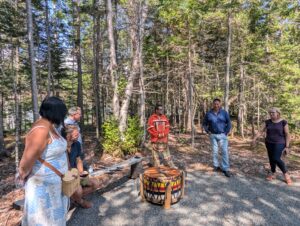
The day began with introductions and a reflection on our April gathering. Mike Kelland opened by reflecting on the importance of Two-Eyed Seeing to Planetary, draw
ing on his relationship with the marine world and the path that led to Planetary’s coastal ocean alkalinity enhancement project at Tufts Cove.
Bree then introduced Netukulimk (pronounced ne-ta-goo-limk), a foundational Mi’kmaq principle of taking only what you need rather than everything you may want. Practised by the Mi’kmaq since time immemorial, it reflects a respectful relationship with the natural world that supports the well-being of people, communities and the environment. Fishing for food, social and ceremonial purposes is one expression of this enduring responsibility.
Her reflections prompted a wide-ranging discussion, with the Planetary team considering how to carry these lessons into its broader work. The exchange reinforced that Two-Eyed Seeing is not simply a program or report, but an invitation to change how we see our relationship with the natural world,recognizing the benefits it provides while honouring our responsibility to care for it. This reciprocity lies at the heart of Netukulimk.
From principle to daily practice
Following the discussion, Diana Philip and Eric Christmas led a conversation on bringing Two-Eyed Seeing into Planetary’s everyday work. Bree observed that Planetary is already reflecting several of its principles, affirming the work underway while emphasizing that Two-Eyed Seeing is an ongoing practice requiring continued listening, learning and accountability.
Ralph Eldridge shared lessons from the Ocean Supercluster’s Two-Eyed Seeing initiative, including how it shaped the organization’s public communications by creating greater space for Indigenous perspectives and concepts. As Planetary’s approach develops, we expect it to influence not only what we do, but how we communicate our work and the relationships that make it possible.
Continuing the learning on Goat Island
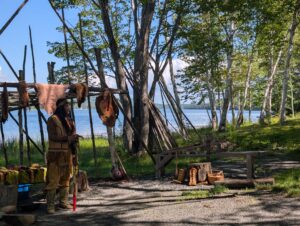
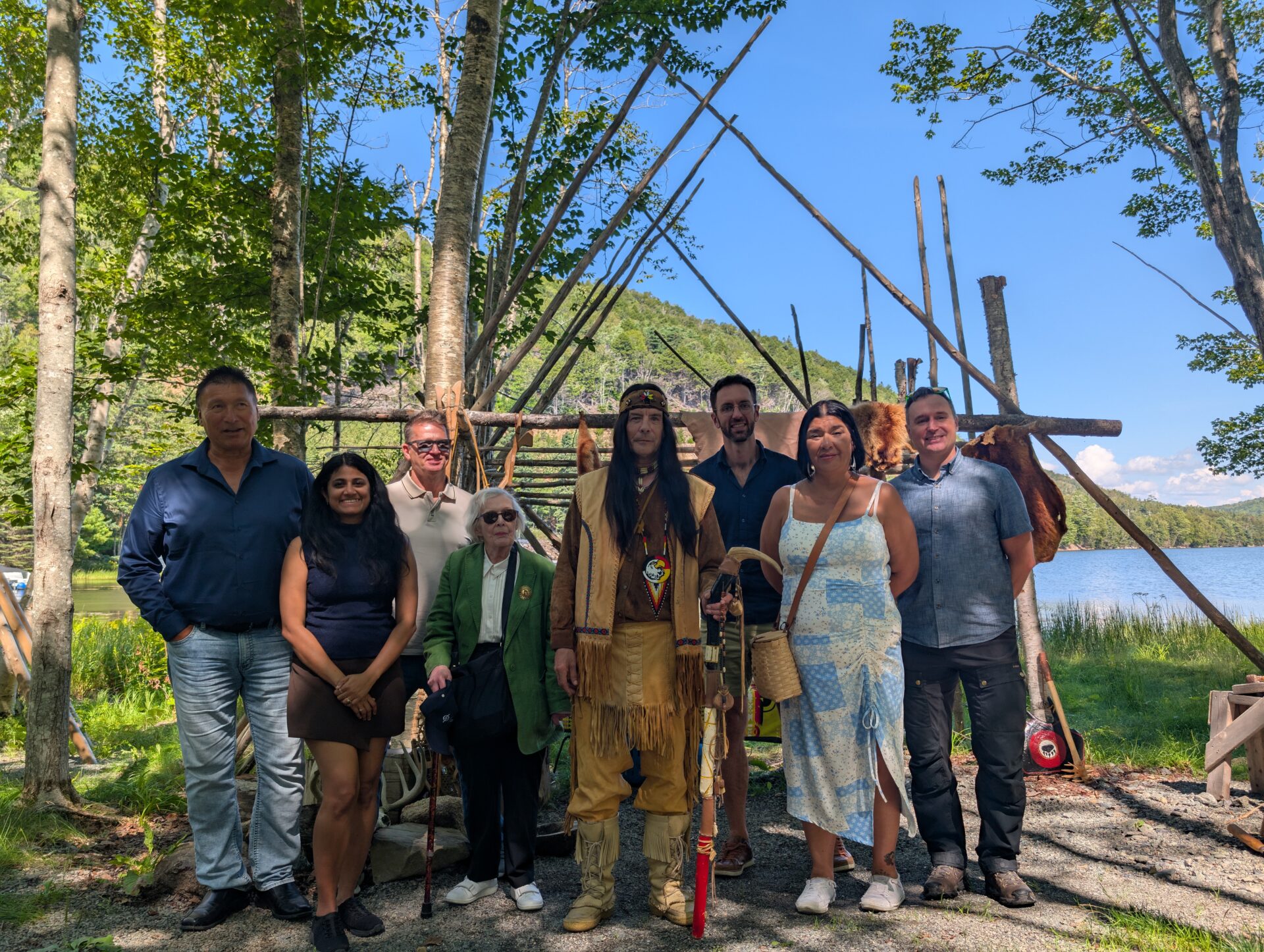
After the conclusion of the formal session the committee went on a guided tour of Goat Island, a sacred place in Eskasoni. Participants learned about Mi’kmaq hunting practices, tools, stories and sacred traditions that remain alive today. Learning on the land provided an opportunity to connect outside the meeting room and deepen the morning’s conversations.
We are grateful to Bree Menge, our advisers, our hosts in Eskasoni and everyone who participated with openness and generosity. Planetary’s next Two-Eyed Seeing session is anticipated for winter 2027. Until then, the work continues through listening, learning and translating what we hear into how we operate.
To learn more about Goat Island and Eskasoni Cultural Journeys, visit eskasoniculturaljourneys.ca.
